An important part of homesteading and preparing for the future is to understand skills that will help you and your community to keep existing. An important part of human existence is food, perpetuating food, in the least calorie expending way. Not only food but other useful crops for fibers and containers and medicines.
You can grow things willy-nilly and see what interesting things pop up from random crosses and hope you get something you like and is productive for you or you can take a more organized way of pollinating your useful plants. There are many books and responses on the internet on how to do this. I won’t explain it all now, but I will when I am actively doing these activities.
But as a skill, it’s one of the most important ones I think you can own. And like all skills, it’s best to practice and refine it before you have to depend on it for survival.
For easiest results, use non-hybrid stable (open pollinated) seeds. (Although technically they all start as hybrid plants at some point.)
And for the love of the Mother, do not make that silly mistake thinking hybrid seeds are GMO seeds. That is what the GMO fans want to confuse you with. GMOs can never naturally happen. Hybrids can and do, naturally as easily as the wind blows. Do not avoid hybrids if they work for you. More advanced gardeners can spend time stabilizing a favorite hybrid over several seasons. That’s a topic for another day however and takes more time than just saving seeds from already stabilized plants. (Those open pollinated seeds, also called Heirloom if around for a certain amount of time.)
If you are new, stick with the easy things. Beans and peas are perfect and cross pollination is the least likely to happen with very little effort.
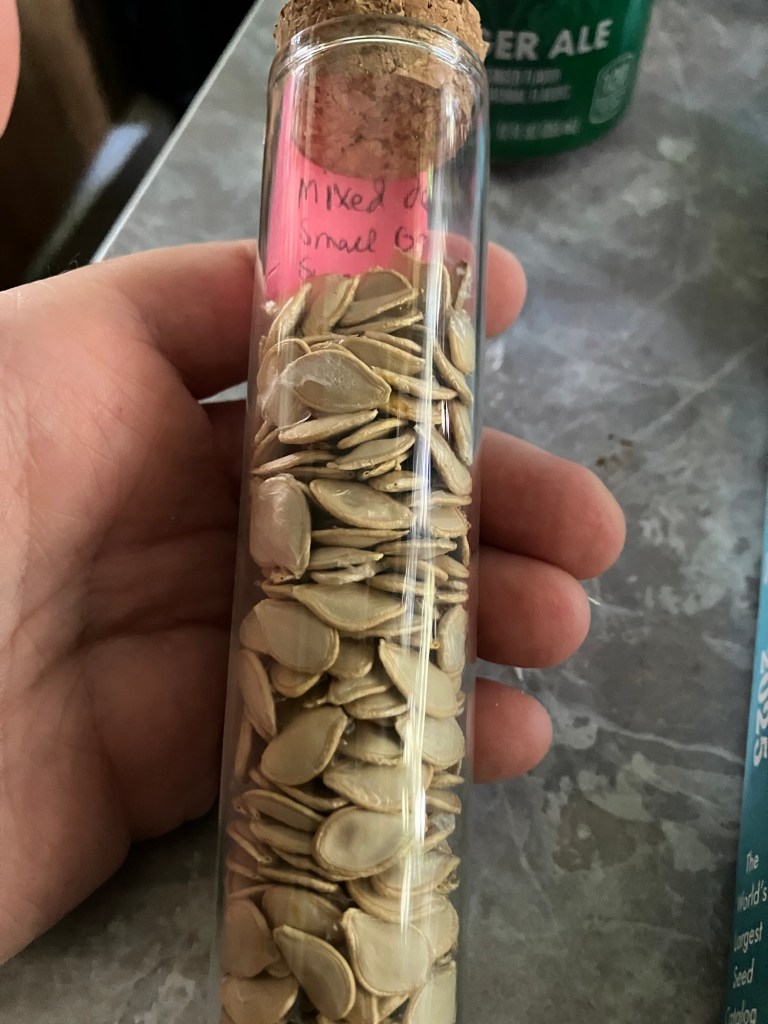
The picture above are small decorative gourds I grew out this year. I did not keep them from crossing with each other but I could have. I just didn’t because they are just decorative small ones with little to no other value (though the seeds are quite edible like other squash). They are just a fun crop so can look any which way they want. They maybe someday might stabilize into a land race after years and years of random mixing.
 Climate Wary Homesteader
After reading your blog, I remembered that I had gathered some seeds, but now I can’t recall where I put them.. Seeing how you keep your plant seeds in a proper bottle has reminded me to store mine carefully. Thank you for the reminder!
LikeLike
Paper envelopes work too, if you are positive they are 100% dry the bottles work. I just happen to have bottles. 🙂 In the past I would use pretty scrapbook paper and make seed packets. I still do that if I’m sharing seeds.
LikeLike